
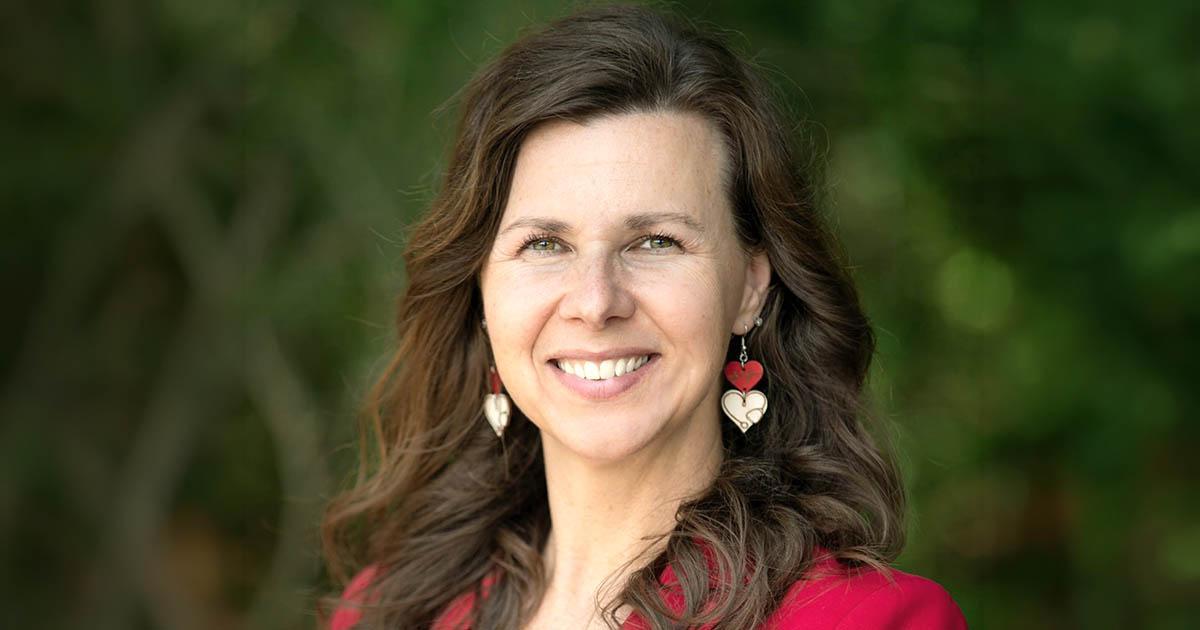
Before the first bell, they’re already at her door. Some come for medications; others aren’t sure why they came, only that something felt wrong. Shea Pugh has been the sole licensed medical professional at Windsor High School in rural Isle of Wight County for seven years — 600 students, 60 staff, one nurse. She’s learned to carry it all with curiosity and compassion.
“You don’t really know what’s going to walk through the door,” she says, and she wouldn’t have it any other way.
Pugh has been a registered nurse for 16 years, with the past seven at Windsor. She’s nationally certified in school nursing, a credential held by only about 5,500 people across the country. The Virginia Association of School Nurses named her School Nurse of the Year in 2025.
“Nurses are the heart of a healthy school,” Pugh says. “We help keep students well. We help keep them in class. We are so much more than Band-Aids and ice packs.”
Shea Pugh
Registered Nurse
Windsor High School, Isle of Wight County Schools
- 2025 Virginia School Nurse of the Year, Virginia Association of School Nurses.
- Nationally certified school nurse; one of approximately 5,500 in the country.
- Co-developer of a statewide mental health toolkit for school nurses, in partnership with the Virginia chapter of the American Academy of Pediatrics and the Virginia Mental Health Access Program.
- Registered nurse for 16 years; seven years at Windsor.
Asking the Right Questions
A big part of Pugh’s practice involves mental health. She says school nurses are often the first person a student will approach when struggling with anxiety or depression, and she takes that access seriously.
“I choose curiosity over judgment,” she says. “Sometimes what they don’t say is louder than what they do say. There are heavy things that these students carry that we don’t really understand unless we are curious.”
That philosophy drove a project close to her heart. Pugh collaborated with the Virginia chapter of the American Academy of Pediatrics, the Virginia Mental Health Access Program and the REACH Institute, a nonprofit that trains providers in evidence‑based mental health care, to develop a mental health toolkit for school nurses. The guide helps nurses structure sensitive mental health conversations. She and her colleagues presented it at the National Association of School Nurses conference in Austin, Texas, to an appreciative audience of professional peers.
In Pugh’s work, community knowledge matters just as much as clinical skills. She is attuned to which families lack reliable transportation or need help connecting to community resources.
“Students are at the center of everything that we do,” she says. “You have to know your community really well.”
Becoming What She Needed
Pugh grew up in Elizabethton, a small town tucked into the East Tennessee Appalachians. She left at 20, and with distance came a clearer understanding of what had been missing in her childhood.
“I needed an advocate as a child, and I didn’t get to be heard or seen,” she says. “I had just always longed for someone to be a voice and to listen.”
Years into her work at Windsor, she was giving words of support to a student who had a difficult home life. The student looked at her, Pugh recalls, and said, “Nurse Shea, if you don’t tell me you love me, nobody will.” Pugh still thinks about that moment.
“I became what I needed, for these kids,” she reflects. “It has been the most fulfilling work I have ever done.”
When VASN called with the news she had won the 2025 School Nurse of the Year award, Pugh’s school resource officer happened to be in the clinic as she gasped and started crying. The officer almost reached for the defibrillator. For Pugh, being chosen for the statewide award felt like something more than a professional honor.
“I was just thrilled to even be in that same playing field,” she says. “I knew the caliber of people I was up against.”
Today, former students invite her to graduation parties and baby showers. One graduate, four years out, still checks in every week.
They all still call her Nurse Shea.
Attention to detail shines through in all of Shea Pugh’s endeavors. As a VRS member, she’s applied the same instinct to her financial future — though it took some convincing to get there. Growing up in Tennessee, her family lived paycheck to paycheck. Nobody talked much about saving, and putting money away for decades down the road was not exactly part of the plan.
When she joined the school district and enrolled in the Hybrid Retirement Plan, her husband, a retired Navy veteran, encouraged her to take advantage of the plan by making the full 4% voluntary contribution: “They’re offering to match what you put in,” he counseled. “Why wouldn’t you?”
Pugh now contributes enough to capture the full employer match and encourages colleagues to start saving early, even if it’s a small amount.
For now, retirement is still years away. She’s finishing a master’s degree in nursing leadership one class at a time, raising two boys with her husband and sharing their home with three dogs. When that day comes, she and her husband plan to load up a camper and see the country. There’s a lot of road left to cover.